The Architecture of Visibility:
A Complete SEO Audit Checklist
A B2B Strategic Manifesto for enterprises seeking to secure domain dominance through rigorous search infrastructure analysis and managed execution in the Trust Economy.
The Vitality of the Search Audit
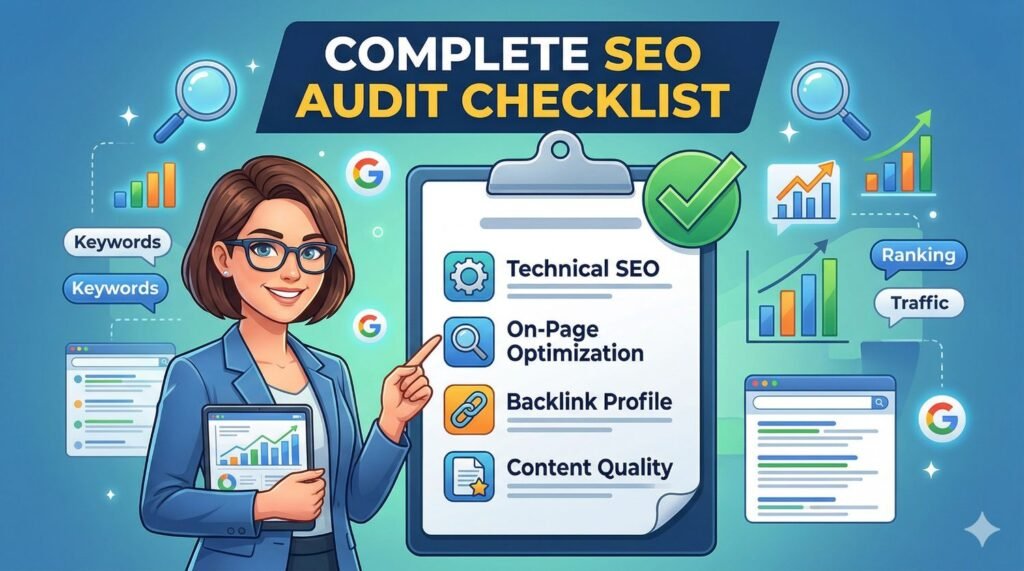
A comprehensive SEO audit is the foundational requirement for identifying the strengths and structural weaknesses of your current search strategy. In an era where algorithms utilize machine learning to judge intent, topical depth, and technical integrity, simply having content is insufficient. This guide provides actionable insights to pinpoint issues hampering your site performance and offers a blueprint to reclaim lost USD revenue through technical and semantic optimization.
Scaling a brand in the competitive USA landscape requires a shift from reactive troubleshooting to proactive infrastructure management. This audit walks you through technical foundations, on-page semantic precision, off-page authority, and the essential toolsets required for high-velocity growth.
Live Audit Progress Engine
Phase 01: Technical SEO Infrastructure
Technical SEO focuses on optimizing the backend architecture of your website. The objective is to ensure search engines can crawl, index, and render your site without friction. If your technical foundation is fractured, your content remains strategically invisible.
1. Mobile-Friendliness & Modern UX
Search engines now operate on a mobile-first index. If your mobile experience is secondary, your desktop rankings will decline. Use the Mobile-Friendly Test tool in Google Search Console to evaluate compatibility. Key focus areas include increasing font sizes for legibility without zooming, compressing large image assets to reduce data strain, and considering the implementation of Accelerated Mobile Pages (AMP) for lightning-fast delivery.
2. Multiple Site Versions & Redirect Integrity
Ensure that search engines index only one version of your site. All alternate versions (HTTP vs HTTPS, WWW vs non-WWW) must utilize 301 redirects to point toward a single canonical version. This prevents split authority and duplicate indexation issues.
3. Performance & PageSpeed Optimization
Load time is a direct ranking factor and a critical component of Core Web Vitals. Use PageSpeed Insights to identify bottlenecks. Priority actions include leveraging browser caching, minimizing bloated CSS/JS code, and implementing next-gen image formats like WebP to enhance speed metrics.
4. XML Sitemap & Robots.txt Precision
Your XML sitemap is the map for search crawlers. It must be submitted via Google Search Console and contain only Status 200 URLs. Exclude redirects, 404s, and non-canonical pages. Simultaneously, verify that your Robots.txt file is not inadvertently blocking high-value directories from being accessed by search agents.
5. Security, SSL, and Mixed Content
HTTPS is a baseline requirement for trust and ranking. Beyond installing an SSL certificate, you must audit for Mixed Content errors—instances where an HTTPS page loads assets via HTTP. Every URL, image, and script must be secure to maintain the integrity of your domain.
The Technical Debt USD Estimator
Estimate the annual revenue leakage caused by unoptimized technical SEO performance and slow load times.
Phase 02: On-Page Semantic Authority
On-page SEO involves optimizing individual pages for intent and context. It is about proving to search engines that you are the most relevant answer to a user's query.
6. Keyword Cannibalization & Zombie Pages
Analyze your search console for instances where multiple pages compete for the same keyword. Consolidate these into a single pillar page to maximize ranking power. Furthermore, identify Zombie Pages—low-value, underperforming content that dilutes your site's authority. Decisions must be made to improve, redirect (301), or delete (410) these assets.
7. LSI Keywords & Content Structure
Modern search agents look for semantic clusters. Incorporate Latent Semantic Indexing (LSI) keywords—related terms and synonyms—to provide context. Structure your content with a single H1 tag, logical H2/H3 subheaders, and ensure your primary keywords appear naturally within the first 100 words.
8. Metadata & Featured Snippets
Audit every meta title and description for length and compelling copy to drive CTR. To capture Featured Snippets (Position Zero), format your content to directly answer common niche questions using structured lists and concise definitions.
9. Modern Copywriting & Engagement
User engagement signals like Dwell Time impact rankings. Enhance readability by using very short introductions, small paragraphs, and frequent subheaders. Integrate high-quality visuals and videos to keep users on the page longer, signaling value to search algorithms.
10. Architecture & Internal Linking
Implement a clean website architecture using topic clusters and breadcrumb navigation. Ensure every page on your site is accessible within three clicks of the homepage. Resolve internal linking issues such as orphaned pages and high click-depth to ensure link equity flows efficiently through your domain.
Phase 03: Off-Page Trust & Authority
Off-page SEO involves building authority through external signals. In the Trust Economy, the quality and relevance of your link profile are the ultimate differentiators.
11. Competitive Analysis & Link Quality
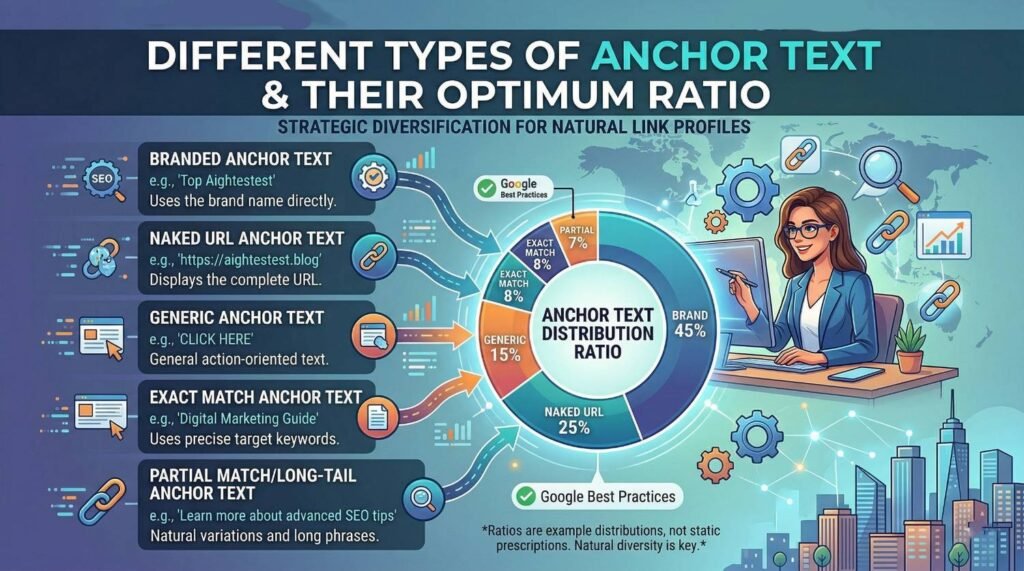
Analyze your competitors' backlink profiles using tools like Ahrefs or SEMrush to identify patterns in their success. Audit your own profile to identify spammy, low-quality, or irrelevant links. Diversity is key; getting too many links from the same type of source looks unnatural and can trigger algorithmic filters.
12. Citation Analysis & Local SEO
Consistent NAP (Name, Address, Phone) information across the web is vital for local search authority. Audit your business citations to ensure uniformity. Inconsistent data acts as a signal of unreliability to search agents.
13. The Disavow Protocol
Identify harmful or unethical links that may have been acquired in the past. Use Google's Disavow Tool to prevent these suspicious links from impacting your domain reputation negatively. This is a delicate process that requires expert oversight.
Experience
Expertise
Authoritativeness
Trustworthiness
Essential Toolset for Professional Audits
Executing a world-class audit requires professional-grade diagnostic tools. Here are the core components of a managed SEO tech stack:
Screaming Frog
The industry-standard crawler for identifying technical errors, broken links, and metadata gaps.
Google Search Console
Direct communication from Google regarding your site's indexing, coverage, and search performance.
Moz / Ahrefs
Comprehensive suites for link profile analysis, keyword research, and competitive intelligence.
BuzzSumo
Analyzing content performance and trending topics to inform your semantic cluster strategy.
Copyscape
Ensuring content uniqueness to avoid duplicate content penalties and protect domain integrity.
Google Lighthouse
An automated tool for improving the quality of web pages, specifically focusing on performance and accessibility.
The Management Vacuum: Why fixing an Audit Stalls
Identifying issues is the easy part. The primary reason business owners fail to rank is the Management Vacuum. You receive a technical audit highlighting 50 broken links, 100 missing alt-tags, and 20 slow-loading pages. Executing these fixes requires 15-20 hours of focused technical work every week.
On DIY marketplaces, if you hire a freelancer to fix these issues, you become the default Project Manager. You have to explain the audit, check the work line-by-line, and monitor their billed hours. This is not scaling; it is adding another management burden to your plate. To truly dominate search, you need an infrastructure of accountability.
At SageDoer, we believe that business owners should give orders, not manage processes. By choosing a fully managed operational model, you eradicate the micromanagement burden and ensure that every point on this checklist is executed with clinical precision. Our Project Managers handle the delegation, the quality assurance, and the reporting, allowing you to remain the architect of your business growth while we handle the gears.
Conclusion: Transitioning to Managed Execution
An SEO audit is merely the architectural blueprint for your brand’s growth. But a blueprint is useless without a construction crew. Success in the modern search landscape is dictated by your execution velocity. If you identify 50 issues but only fix two per month, you are conceding market share to competitors who are moving faster.
By switching to a fully managed operational model, you eliminate the Management Vacuum, bypass the exorbitant markups of DIY boards, and reclaim hundreds of strategic hours annually. It is time to stop being a babysitter for your remote staff and start being the visionary for your brand’s success. Give the order, relax, and let the verified experts handle the technical heavy lifting. Reclaim your focus by exploring our fully managed Digital Marketing Virtual Assistant services today.
Secure your search authority with 100% accountability and zero management burden.